AI & Data Engineering

Data Engineering & Pipelines

Every company is a data company the moment two systems disagree about revenue. Data engineering is the discipline that moves data from where it is created to where it is needed, transformed, tested and on time, so dashboards are trusted, AI has something worth learning from, and nobody reconciles spreadsheets at month end. We build the pipelines, the warehouse and the discipline around both.

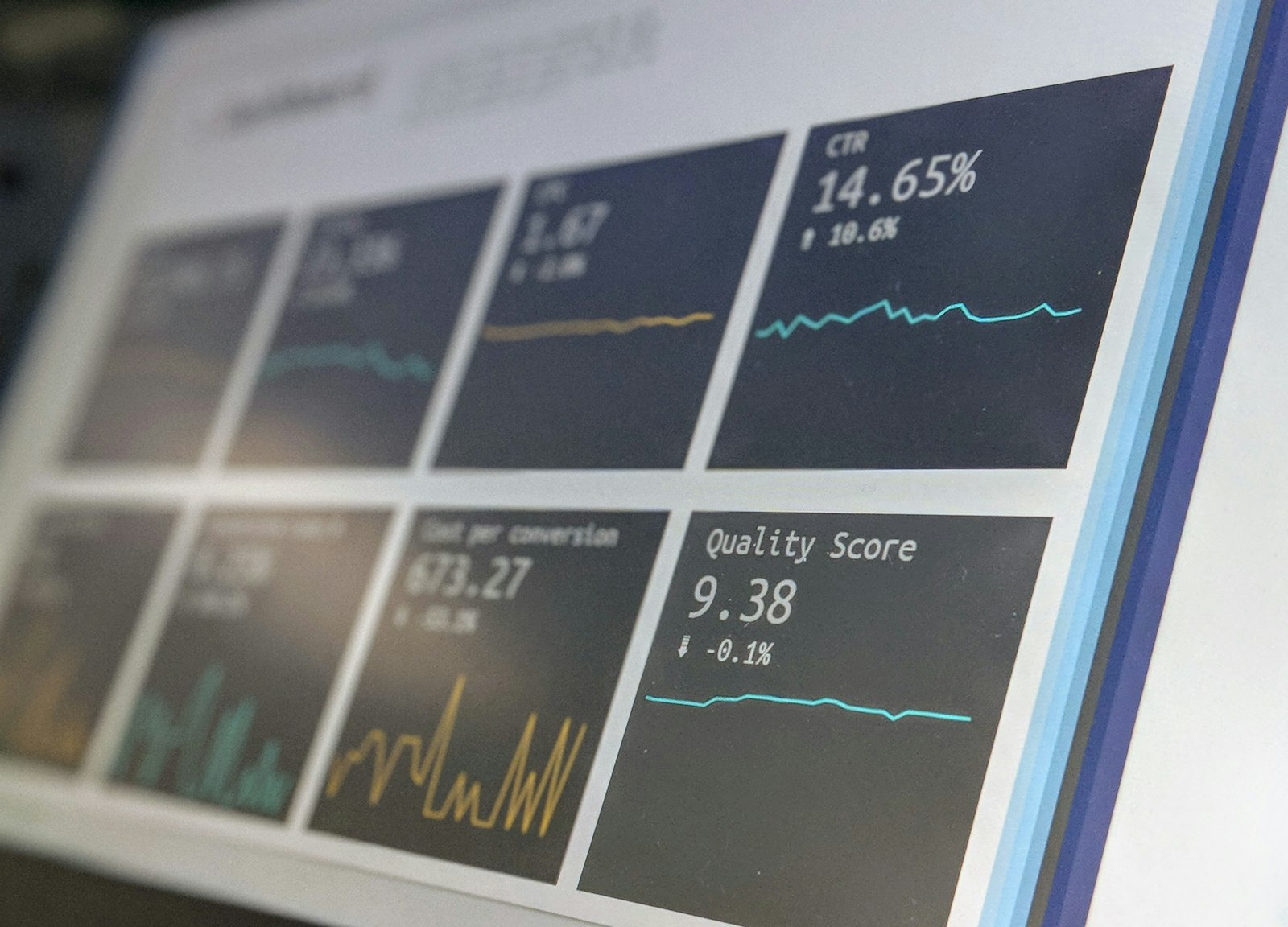
Analytics dashboard showing click-through rate and quality metrics

The terms, translated

The industry drowns this field in acronyms, so here is the map. ETL and ELT: moving data and reshaping it, before or after it lands. CDC, change data capture: streaming every database change as it happens instead of copying tables nightly. Batch versus streaming: on a schedule versus continuously. Reverse ETL: pushing warehouse insight back into the tools where people work. Lakehouse: warehouse reliability on data lake economics. We speak all of them, and we will happily never say them in a meeting again.

Pipelines and orchestration

Reliable pipelines are software, not scripts: orchestrated with Airflow, Dagster or Cloud Composer, transformed with dbt under version control and code review, idempotent so reruns are safe, and backfillable so history can be rebuilt when logic changes. Every run is observable, every failure alerts a named owner, and every dataset states its freshness out loud.

Streaming and real time

When minutes matter, fraud, inventory, operations, personalisation, data moves as events: Kafka, Pub/Sub or Kinesis as the backbone, with Flink or Spark Structured Streaming doing the continuous computation. We are honest about the cost of real time and only spend it where the business case survives arithmetic; a great deal of the world is perfectly served by a fifteen-minute batch.

Change data capture from your databases

Your operational databases are the source of truth, and CDC gets that truth into the warehouse in minutes without hammering production: Debezium, Google Datastream or AWS DMS reading the transaction log, replicating inserts, updates and deletes as they happen. It is the same discipline as our migration practice, applied continuously rather than once.

Python pipeline source code on a developer's screen

Warehouse and lakehouse, modelled to be trusted

BigQuery, Snowflake, Redshift or a Databricks and Iceberg lakehouse, chosen by workload and economics rather than fashion. The value is in the modelling: layered zones from raw to curated, dimensional models where analysts live, partitioning and clustering that keep queries fast, and cost controls that keep the bill boring. One source of truth, so meetings argue about decisions instead of numbers.

Data quality and governance

Bad data is worse than no data, because people act on it. Every pipeline we ship carries tests, freshness, volume, schema, business rules, data contracts between producers and consumers so upstream changes break loudly in staging instead of silently in production, lineage that shows where any number came from, and the access controls and retention rules that privacy law and your auditors expect.

Serving: analytics, activation and AI

The pipeline is only the means. The ends: BI dashboards people actually trust, in Looker, Power BI, Metabase or Grafana; reverse ETL pushing segments and scores into the CRM and ad platforms where they earn money; and clean, documented datasets feeding machine learning and LLM retrieval, which is exactly where our AI practice picks up.

The data stack we work in

Assembled per engagement, never resold: we hold no vendor margin and no allegiance.

  • Airflow, Dagster, Cloud Composer, dbt
  • Kafka, Pub/Sub, Kinesis, Flink, Spark
  • Debezium, Datastream, AWS DMS for CDC
  • BigQuery, Snowflake, Redshift, Databricks
  • Iceberg and Delta lakehouse formats
  • Great Expectations and dbt tests for quality
  • Looker, Power BI, Metabase, Grafana
  • Reverse ETL and CRM activation
  • Python and SQL as the working languages

Common questions

ETL or ELT, and does the difference actually matter?

It matters operationally more than philosophically. ELT, land the raw data, transform inside the warehouse with dbt, is the modern default: cheaper to build, easier to audit, and re-runnable when logic changes because the raw history is still there. Classic ETL still earns its place when data must be cleaned or anonymised before it may land anywhere. We choose per source, not per ideology.

Do we need real-time data?

Ask what decision changes in the minutes you would save. Fraud checks, stock levels and operational alerting genuinely need streaming; most reporting, finance and planning workloads are perfectly served by batches every fifteen minutes or every night at a fraction of the cost and complexity. A good architecture mixes both, and we will show you the arithmetic behind every choice.

Our dashboards disagree with each other. Can you fix that?

Yes, and the cause is almost always structural: three teams computing revenue three ways from three copies of the data. The fix is one governed source of truth, metrics defined once in the transformation layer rather than in every dashboard, and tests that pin those definitions down. It is unglamorous work with an outsized payoff: meetings stop arguing about whose number is right.

What does a warehouse cost to run, and how do you keep it sane?

The warehouses meter compute and storage, and left alone the compute line grows until finance notices. We keep it boring by design: partitioning and clustering so queries touch less data, incremental models instead of full rebuilds, workload isolation so an analyst's experiment cannot starve production, and per-team cost attribution so consumption has an owner. Most estates we inherit shrink their bill in the first quarter.

Our pipelines exist but break constantly. Rebuild or repair?

Repair first, usually. We stabilise what runs, add tests and alerting so failures are visible and attributable, then replace the worst pieces incrementally while the business keeps its data flowing. A big-bang rebuild is occasionally justified, when the foundation is genuinely unsound, but it is the expensive option and we will say honestly which side of the line your estate sits on.

Contact

Tell us what
you are building.

A few lines is enough. We will come back with an honest view of whether we are the right people for it.