Product & Hardware Engineering

Mechanical Engineering

Mechanical design decides most of a physical product's cost before the first part is ever made. We engineer parts and assemblies that work, survive their environment and can be manufactured at your volume for a sane price: CAD, simulation, prototyping and production documentation from one team, with the honesty to tell you when a part is over-engineered.

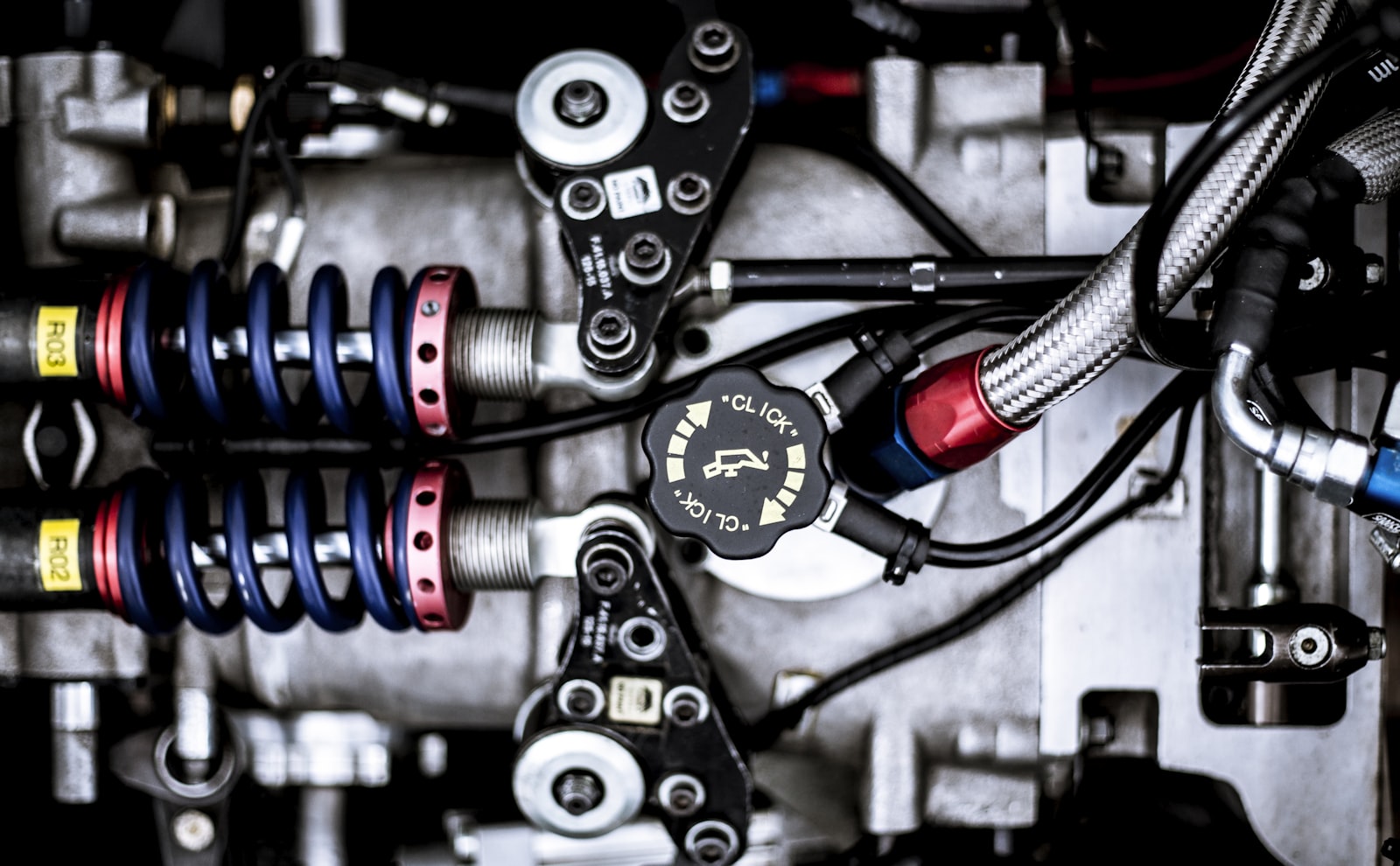
Suspension springs and linkages inside a machine assembly

3D CAD and product design

Parametric CAD in SolidWorks, Fusion 360 or Onshape, modelled with intent: assemblies that update when a dimension changes, tolerance thinking built into the model, and revision control treated the way we treat source code. From concept geometry to a full production assembly with every fastener accounted for.

Design for manufacture, from the first sketch

Every process has rules, and parts designed without them cost double: draft angles and uniform walls for injection moulding, bend radii and K-factors for sheet metal, tool access and setup counts for CNC machining, orientation and supports for additive. We design to the process your volume justifies, and we requote the design across processes when volume changes the answer.

Simulation and engineering analysis

FEA for stress, deflection and fatigue where failure is expensive, thermal analysis for products that make heat, and tolerance stack-up analysis so parts assemble in production and not just in CAD. Simulation guides design; physical testing confirms it. We are explicit about which claims come from which.

Rapid prototyping and iteration

Ideas get physical fast: FDM and SLA printing in-house cadence for fit and form, SLS and MJF through partners for functional parts, CNC prototypes when the material matters, and vacuum casting for small batches that look like production. Each loop answers a named question, fit, strength, feel or assembly time, so iteration converges instead of wandering.

Sparks flying while grinding a steel section

Enclosures, housings and structural parts

The mechanical half of electronic products is its own craft: enclosures with board mounting, connector alignment, thermal paths, gaskets and ingress protection, snap fits that survive a thousand cycles, and structural brackets and frames sized by analysis rather than instinct. Done alongside our electronics practice, the board and the box are designed together.

Production documentation and handover

Manufacturers quote from documents, not from CAD screenshots: 2D drawings with GD&T where it earns its place, critical dimensions flagged for inspection, complete BOMs with approved alternates, assembly instructions and incoming-inspection criteria. Our documentation package is one a supplier can price and build from without a single clarification call, and it is yours.

Materials and finish selection

Material choice is a systems decision: load, temperature, chemistry, UV, regulatory contact requirements and cost per part at your volume. Aluminium or steel, ABS, polycarbonate, nylon or a glass-filled grade, anodising, powder coat or plating; we select against the environment the product will live in and document why, so the decision survives the next sourcing conversation.

Common questions

Can you work from a rough sketch or verbal idea?

Yes. Plenty of products start as a photo of a whiteboard. We turn the idea into requirements, the requirements into concept CAD, and the concepts into a design review with you. The discipline is in writing the requirements down first, loads, environment, lifetime, target cost and volume, because those numbers, not the sketch, decide the design.

Which CAD systems do you use, and do we get the native files?

SolidWorks, Fusion 360 and Onshape day to day, with STEP exchange for everything else. You receive the native parametric files, not just exports, together with the drawings and BOM. Your product should never be held hostage by someone else's file format, including ours.

Do you make the prototypes yourselves?

FDM and SLA prints we typically run in-house for speed of iteration; SLS, MJF, CNC and cast urethane parts come from a vetted partner network with days of turnaround. The point is loop speed: most fit-and-form questions get a physical answer inside a week.

Can you connect us with manufacturers for production?

Yes. We prepare the manufacturing package, introduce suppliers matched to your process and volume, run the quoting round with you, and review first articles against the drawings. The supplier relationships are yours, we take no margin on their work, and the documentation is complete enough that you could source anywhere.

How do design changes work once parts are in production?

Through revision control, the same discipline as software: a change request with reason and impact, updated drawings with a new revision letter, notification to the supplier with an effective date or serial break, and updated inspection criteria. Uncontrolled change is how a working product quietly stops working, so we make change boring.

Contact

Tell us what
you are building.

A few lines is enough. We will come back with an honest view of whether we are the right people for it.