AI & Data Engineering

Robotics & Embodied AI

Robotics is where our practices converge: mechanics that move, electronics that sense, firmware that reacts and AI that decides, all in one machine that has to work in the physical world, where nothing is ever quite calibrated and the lighting is never like the lab. We take robotic products from idea and invention to machines earning their keep in the field.

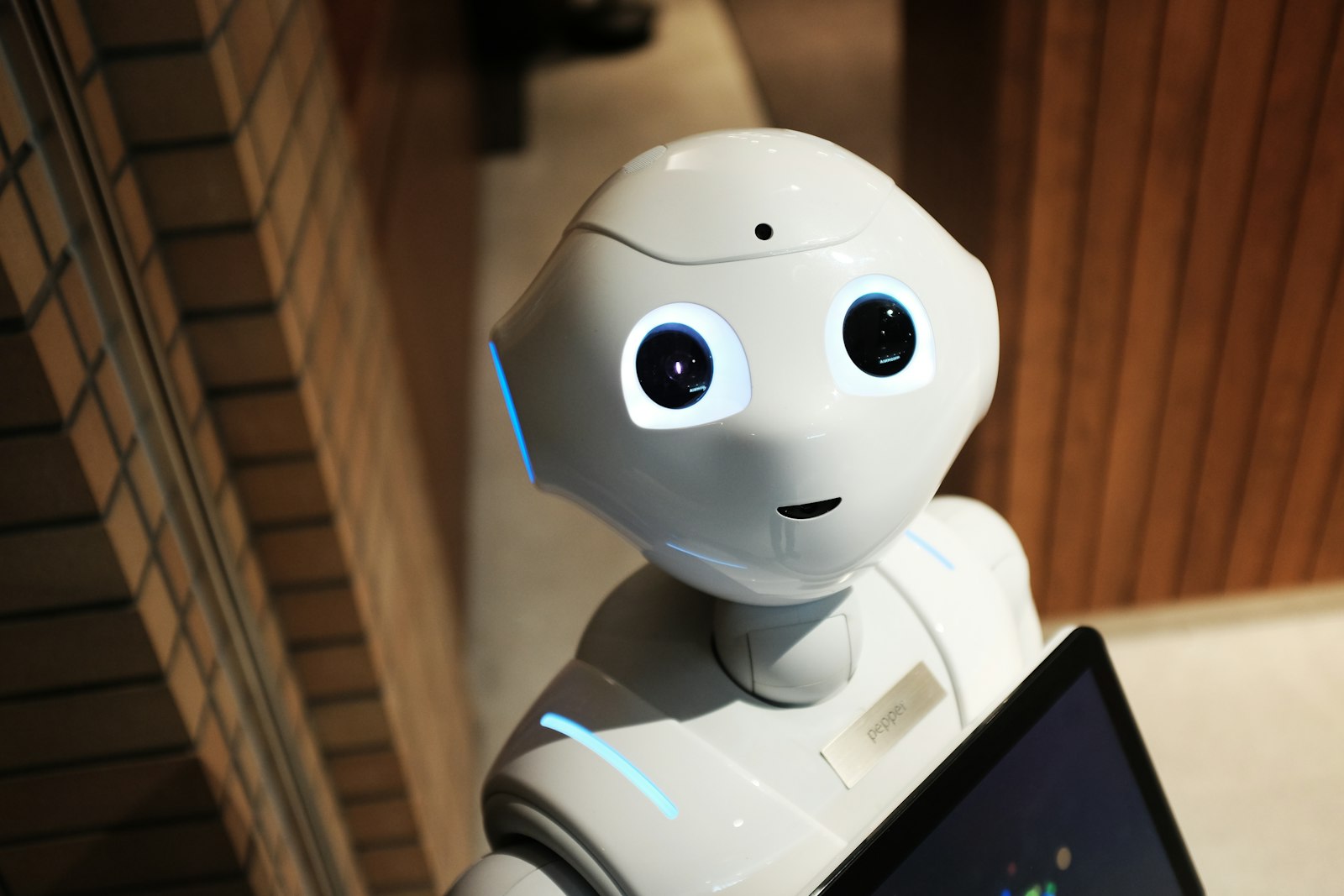
Humanoid robot with camera eyes looking toward the viewer

Perception and computer vision

A robot is only as good as its picture of the world. We build perception from cameras, depth sensors, lidar and IMUs: detection, segmentation and pose estimation with modern vision models, classical geometry where it is faster and more robust, and sensor fusion that keeps the estimate honest when any single sensor lies, which in the field is daily.

Robot software on ROS 2

ROS 2 is the operating layer of modern robotics and we build on it natively: node architecture, DDS communication tuned for reliability, lifecycle management, teleoperation, and simulation hooks. Where ROS is the wrong tool, hard real-time loops, safety controllers, we write against the metal and bridge cleanly, so the system is engineered rather than assembled.

Motion planning and control

From wheels to arms: navigation with Nav2 and custom planners, manipulation with MoveIt, and control loops from PID to model predictive control depending on what the dynamics demand. The discipline is in the envelope: knowing the limits of the machine, planning inside them, and degrading gracefully when the world refuses to cooperate.

Simulation before steel

Every behaviour is developed and abused in simulation before it touches hardware: Gazebo and NVIDIA Isaac Sim for physics and photorealistic perception, domain randomisation so models survive the sim-to-real gap, and regression suites where every past failure becomes a permanent test scenario. Simulation makes iteration cheap; the field makes it true.

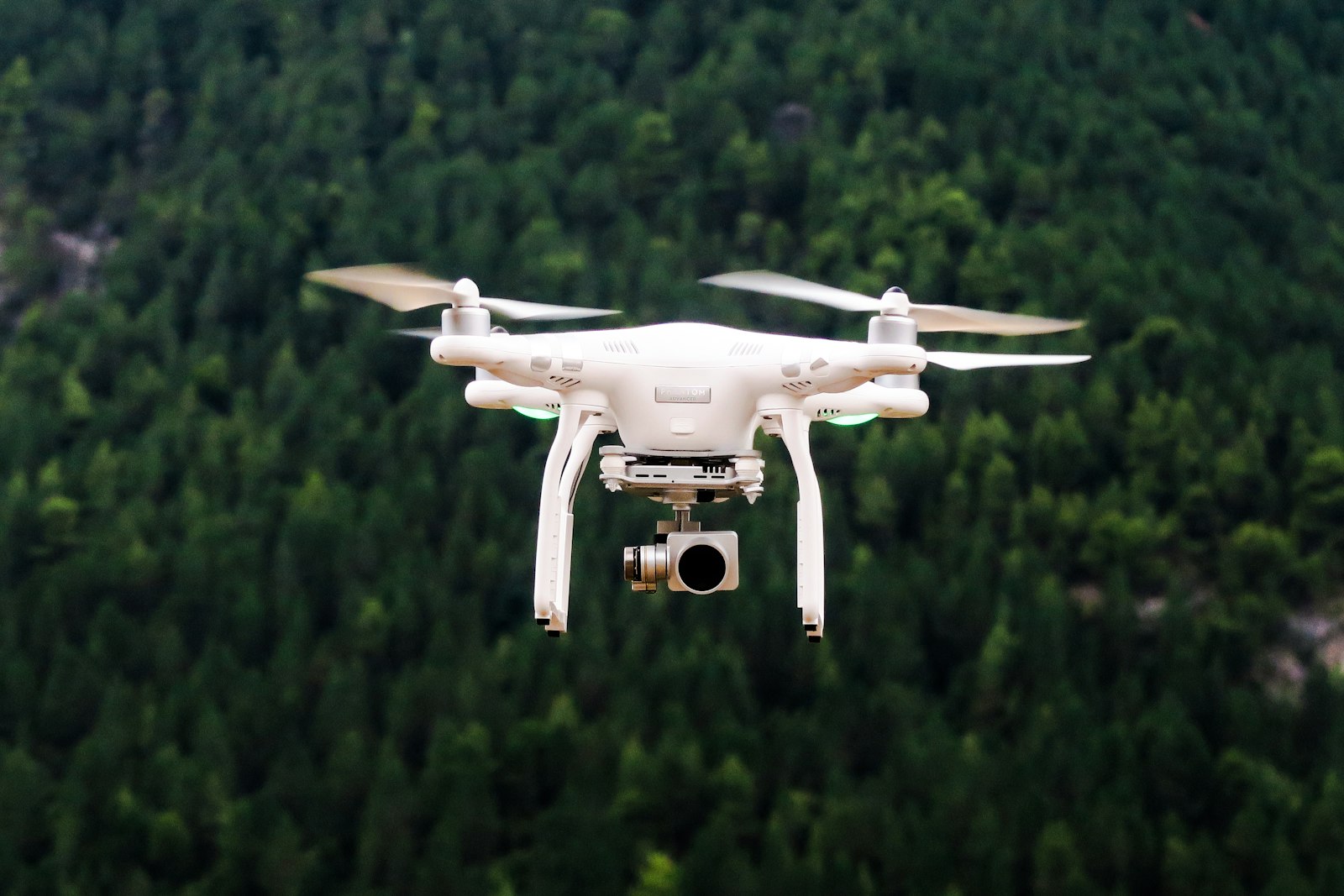
Camera drone hovering above a forest

Edge AI on the machine

Autonomy cannot wait on a data centre. We deploy models onto the robot itself, NVIDIA Jetson, embedded GPUs, accelerators like Coral, quantised and optimised with TensorRT until the perception stack fits the power and thermal budget the machine actually has. Designed alongside our electronics practice, the compute, power and cooling are engineered together.

Autonomous platforms and fleets

Autonomous mobile robots for warehouses and industry, inspection robots for places people should not have to go, drones for survey and monitoring. Beyond one machine: fleet coordination, charging and docking, mission planning, and the operations dashboard that tells you where every unit is and what it is doing, built on the same cloud practice as everything else we ship.

From invention to product

Some robotics work is invention: a machine nobody has built yet. We run R&D engagements that respect the uncertainty, milestone-gated prototypes, written findings, honest kill criteria, and carry what survives into productisation with our mechanical, electronics and manufacturing path. Safety is engineered from day one, e-stops, interlocks and risk assessment against the relevant machinery standards.

Common questions

Can you build a robot from scratch, or only the software?

Both, and scratch is our favourite kind: mechanical design, electronics, firmware, perception and autonomy are all in-house practices, so one team carries the machine from sketch to field trial. If you already have hardware, we are equally comfortable bringing autonomy to an existing platform or rescuing a stack another team could not stabilise.

Which robotics platforms and hardware do you work with?

ROS 2 as the software backbone; NVIDIA Jetson for on-board AI; the usual sensor families, cameras, depth, lidar, IMU, encoders; and actuation from hobby-grade to industrial servo drives. For arms and mobile bases we work both with commercial platforms and with custom machines designed in-house when nothing commercial fits the job.

How much can really be tested in simulation?

More than most teams use and less than the demos imply. Navigation logic, fleet behaviour, perception under varied lighting and weather, and thousands of edge cases can run in Gazebo or Isaac overnight. What simulation cannot fully capture, contact dynamics, sensor noise, the general malice of the real world, we test in staged field trials with instrumentation, so surprises are recorded rather than fatal.

What about safety and certification for robots around people?

Safety is a design input, not a review step: risk assessment first, then e-stops, interlocks, speed and separation monitoring, and safety-rated components where the risk demands them, engineered with the relevant standards for industrial and mobile robots in view. For formal certification we work alongside notified bodies and test labs, and we design so that visit is a confirmation, not a discovery.

We have research, a paper or a patent idea. Can you make it real?

That translation is exactly what our R&D engagements are for: taking an algorithm, a lab prototype or an invention disclosure and engineering it into a machine that runs unattended. We work comfortably alongside founders, researchers and IP counsel, provide the documentation that supports patent filings, and are honest at every gate about what the physics will and will not allow.
Contact

Tell us what
you are building.

A few lines is enough. We will come back with an honest view of whether we are the right people for it.